Bringing Canadian Wildflowers Into Your Home
There are moments in nature that last only a few weeks.
A Painted Trillium quietly opens beneath the forest canopy. Fireweed paints entire hillsides after a wildfire. Marsh Marigolds brighten the edges of streams before disappearing into summer.
These are small moments—easy to overlook unless you slow down.
They're also the moments I find myself returning to with a sketchbook.
Every botanical illustration I create begins outside, walking trails, exploring provincial parks, or simply paying attention to the plants growing close to home. My hope is that each drawing preserves a small piece of Canada's landscapes long after the season has passed.
Perhaps that's why flower art has always felt meaningful to me. It isn't only decoration—it's a reminder of places we've visited, seasons we've experienced, and the quiet beauty that surrounds us every day.

Why Flower Art Speaks to Us
Flowers have always carried meaning: celebration, comfort, memory, and change. On the wall, flower art can:
soften a room that feels too cold or minimal
add a gentle hit of colour without overwhelming the space
remind you of a place, a person, or a season you love
Unlike real bouquets, flower art doesn’t fade after a week. It stays – a small, constant reminder of the natural world, even in the middle of a busy city or a long winter.
What Makes Canadian Flower Art Different?
“Flower art” is a huge category online, but Canadian flower art often carries a different story.
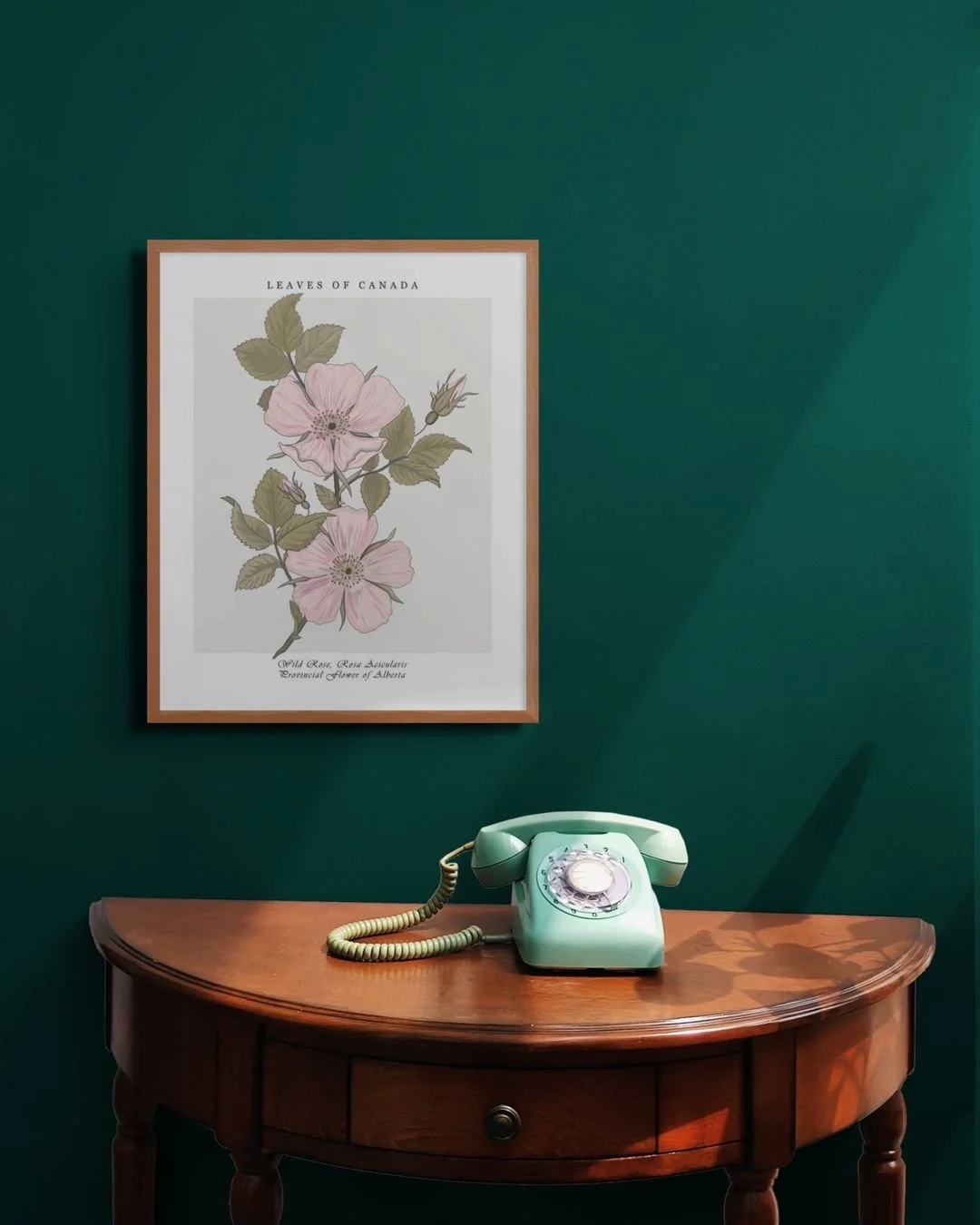
Real, local plants – Trilliums, fireweed, wild roses, asters, lupines, coneflowers, and countless others. These are plants you actually see on Canadian trails, in suburban gardens, or along country roads.
A sense of season – Spring ephemerals, lush summer blooms, golden autumn leaves, even the quiet of winter branches. Canadian botanical art often follows the rhythm of the year.
Place-based memory – A print of a specific flower can instantly pull you back to a province, a childhood landscape, or a favourite hike.
Even when a piece is more stylized or modern, the feeling of place gives it depth beyond generic floral decor.
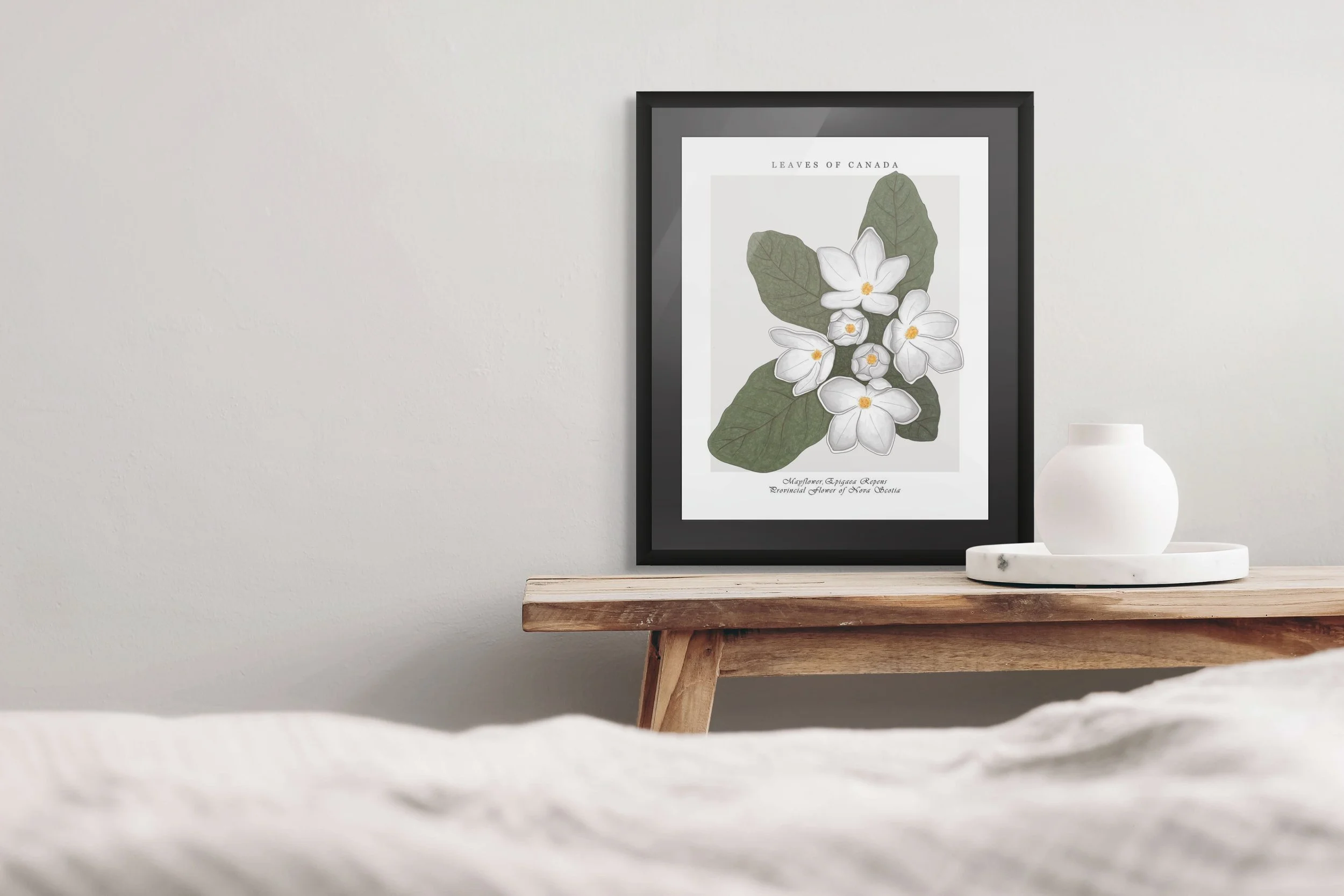
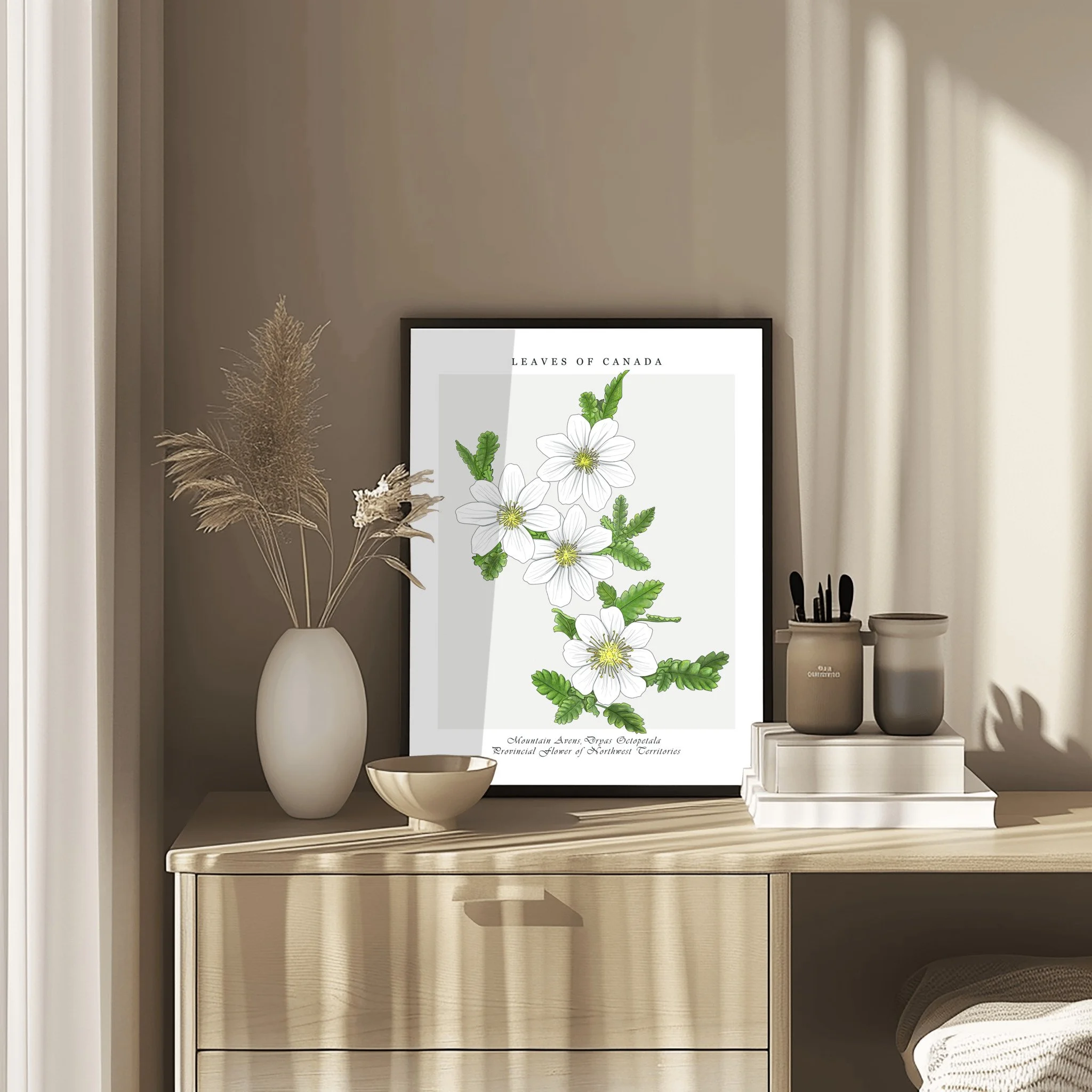
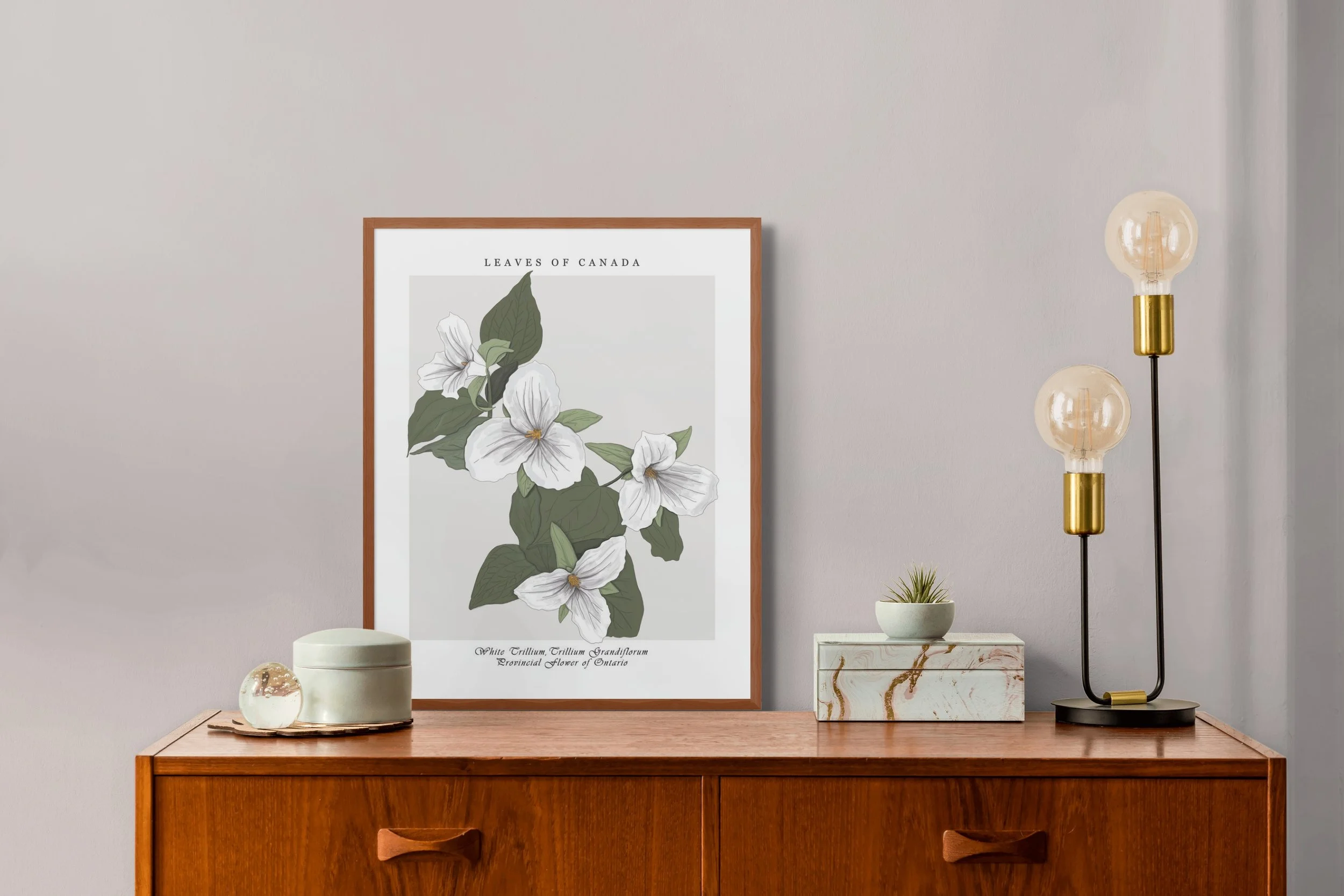
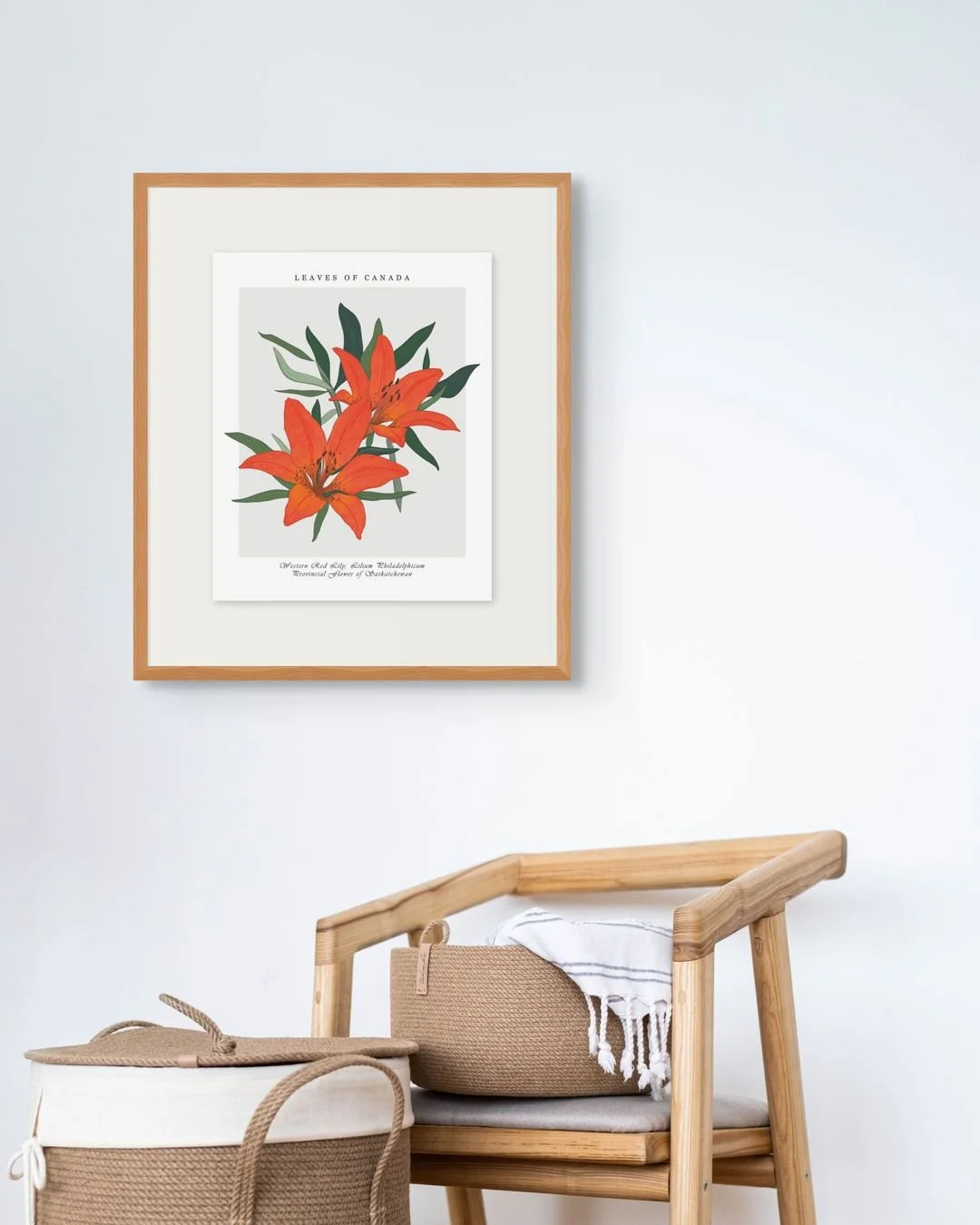
Types of Flower Art You’ll Find in Canada
There isn’t just one way to bring flowers onto your walls. Some of the most popular approaches include:
1. Pressed Flower Art
Real flowers and leaves are pressed, preserved, and arranged in frames. These pieces feel delicate and nostalgic, and every composition is one-of-a-kind.
2. Botanical Illustration
Hand-drawn or painted studies of plants – sometimes realistic and detailed, sometimes simplified and modern. These work beautifully in sets and gallery walls.
3. Floral Photography
Close-ups of petals, macro details, and dreamy garden scenes. Photos can feel very contemporary and are great for large-scale statements.
4. Vintage Botanical Prints
Reproductions of old botanical plates (think 18th–19th century scientific drawings) with Latin names and soft, aged colours. Perfect if you like a slightly academic or vintage mood.
At Leaves Of Canada, we lean into botanical illustration and quiet, contemporary interpretations of nature – not just flowers, but also leaves, branches, seed heads and forest textures. Flowers are one part of the story, not the whole story.
How to Choose Flower Art for Your Home
If you’re not sure where to start, here are a few simple steps.
1. Start with Feeling, Not Colour
Ask yourself: What do I want this space to feel like?
calm and restful
bright and joyful
soft and romantic
grounded and earthy
Once you know the feeling, you can look for flower art that carries that mood – airy stems, bold blooms, muted palettes, or strong contrast.
2. Consider the Plants Themselves
Sometimes the plant is the story:
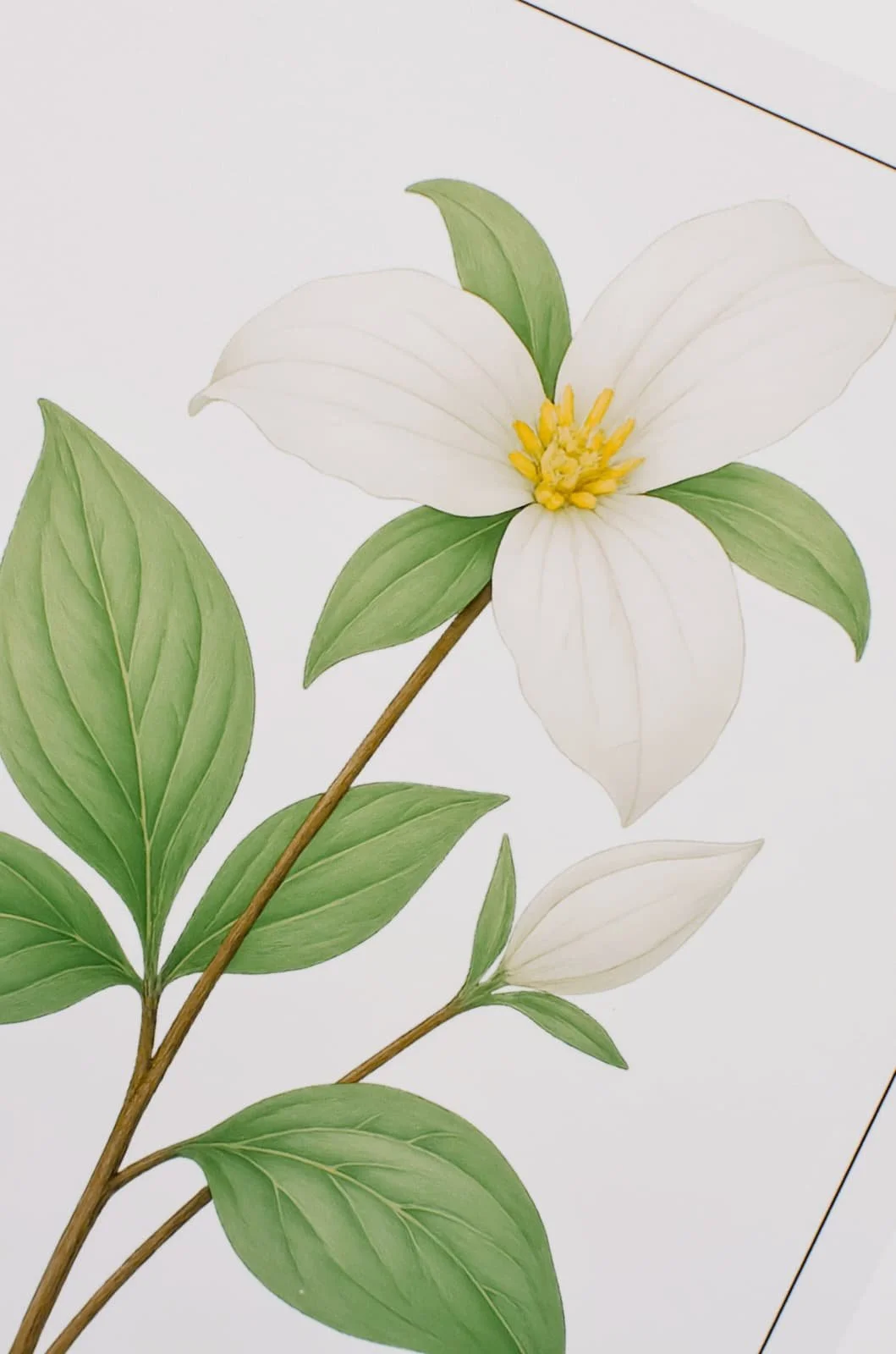
A trillium for Ontario memories
Fireweed for resilience and regrowth
Wild roses for a romantic, slightly wild touch
Bluebells or lupines for a cooler, coastal feeling
Choosing a plant with meaning turns your art into a small personal symbol, not just decoration.
3. Match the Scale to the Wall
Large wall: one big print or a set of 2–3 pieces
Narrow wall or nook: a single medium print or a vertical pair
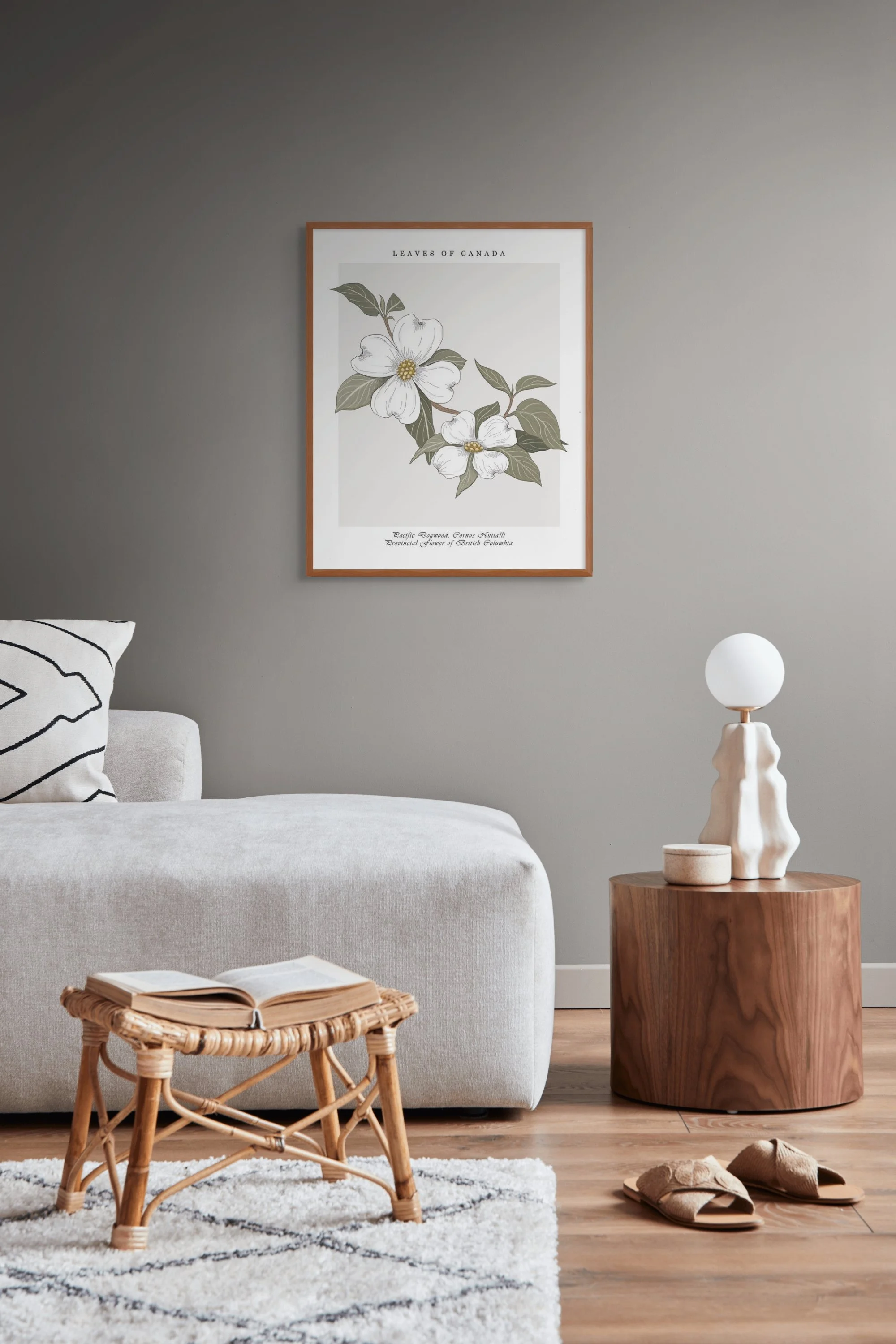
Above a bed or sofa: choose a print that’s roughly ⅔ the width of the furniture, so it feels anchored
4. Keep a Simple Colour Story
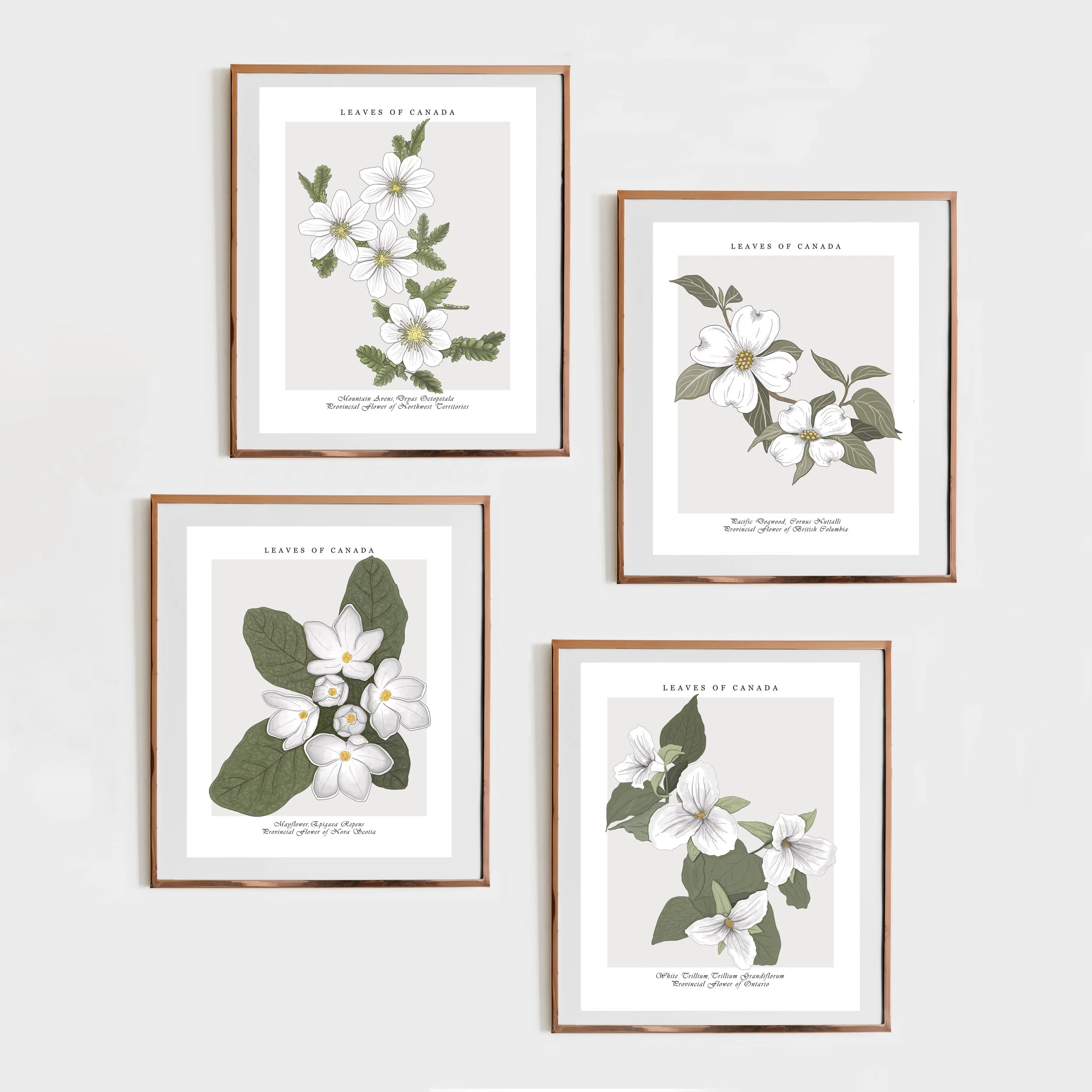
You don’t need everything to match perfectly, but it helps if your prints share one or two core colours – for example:
soft greens + warm neutrals
dusty pinks + deep greens
muted gold + off-white
This keeps your wall feeling intentional rather than busy.
Flower Art in Different Rooms
Here are a few ideas for where to use flower and botanical art in your home:
Living Room
One larger flower or botanical print above the sofa
A small gallery wall mixing flowers, leaves, and a few abstract or landscape pieces
Bedroom
Gentle, tonal florals over the bed for a calm atmosphere
A single botanical study near your reading chair or nightstand
Entryway & Hall
A narrow print by the door as a soft welcome
A vertical pair of botanicals to add interest to a small wall

Kitchen & Dining
Herb or garden-inspired prints near the table or coffee corner
Simple line-based or minimal florals if your kitchen is already colourful
Home Office or Studio
A print of your favourite wildflower or tree branch where you can see it from your desk
A small cluster of botanicals that remind you to take breaks and go outside
Flower Art as a Gift (That Outlasts a Bouquet)
Flower art is a beautiful way to mark a moment:
birthdays
anniversaries
housewarmings
weddings or engagements
new babies, new jobs, or new chapters
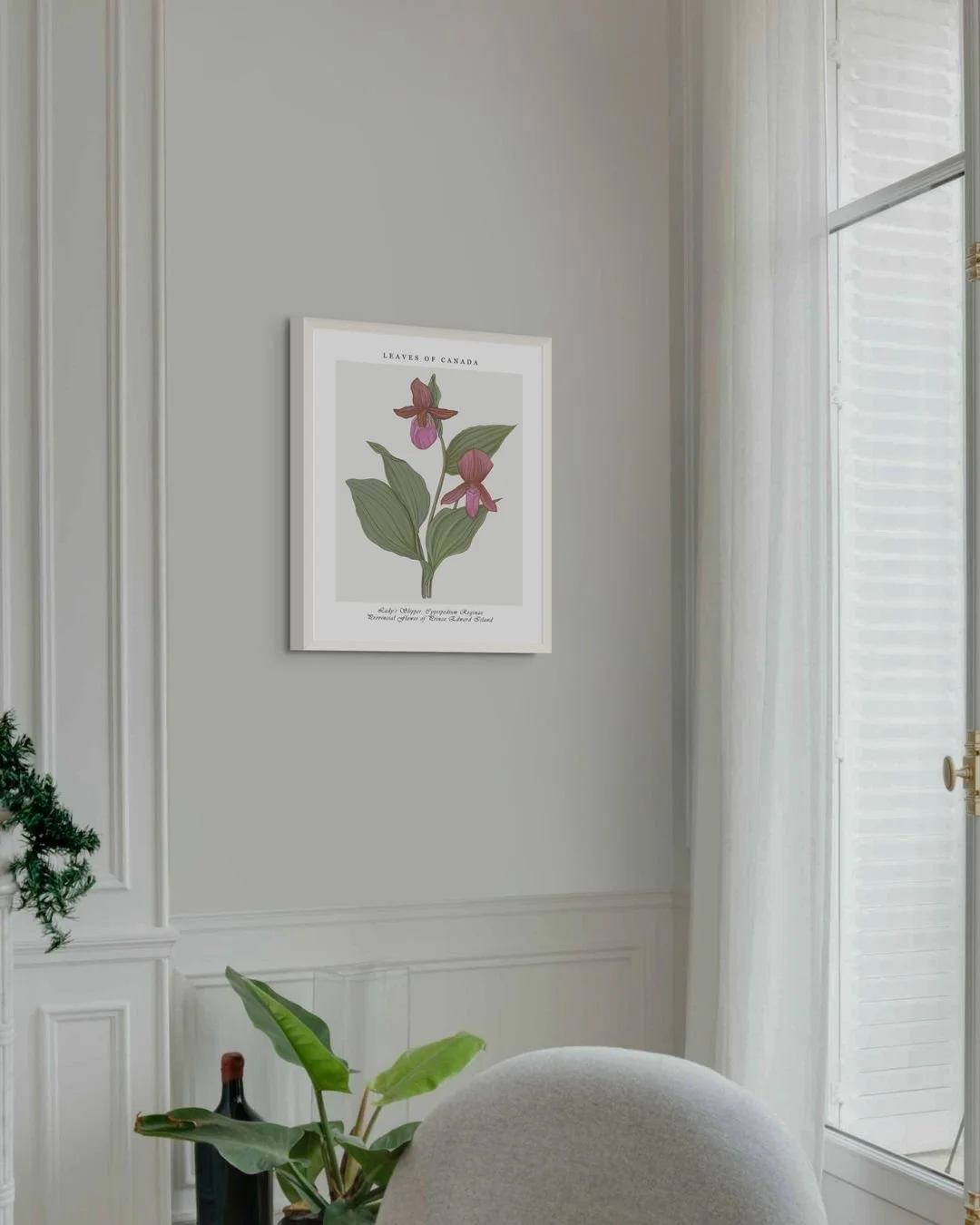
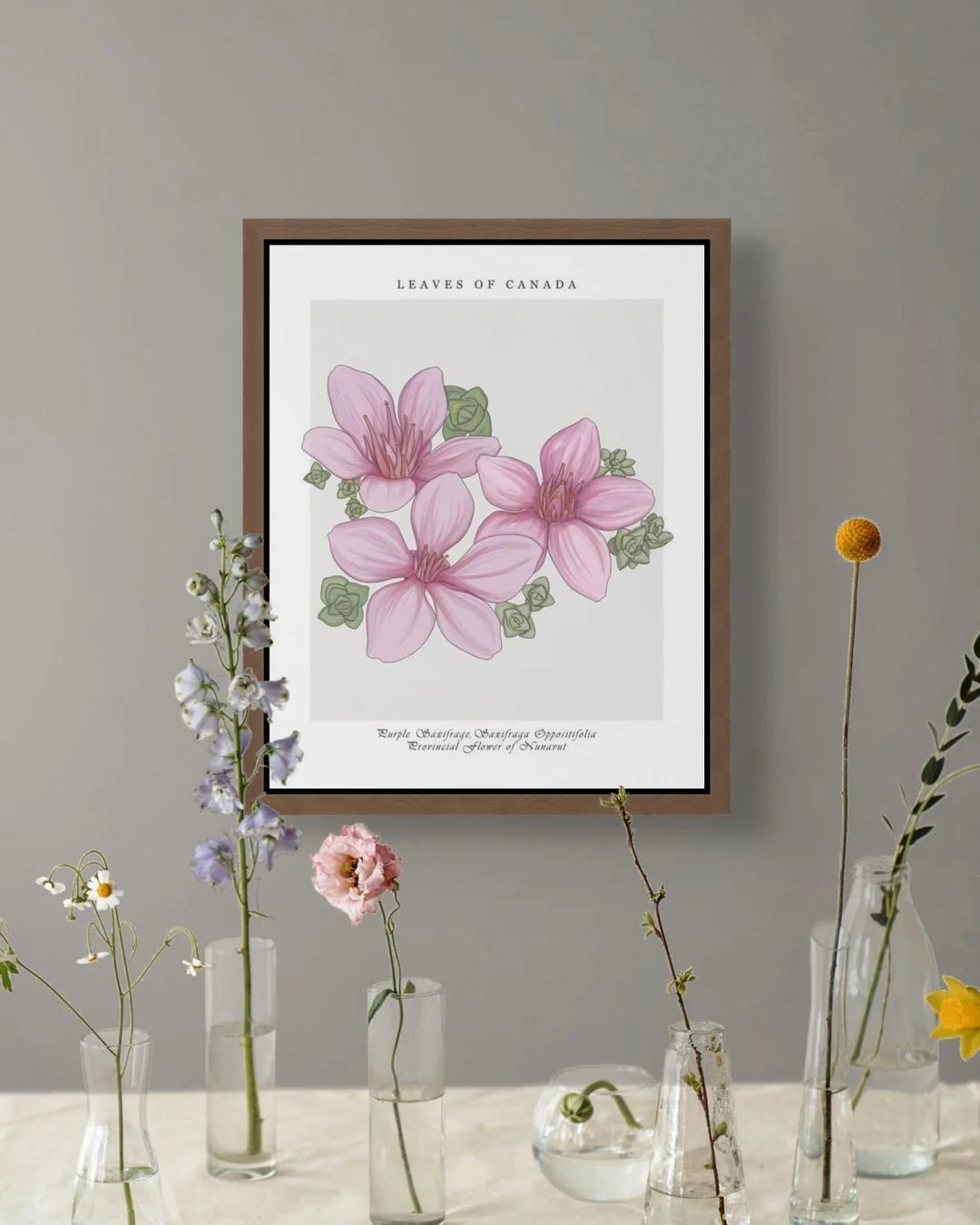
You can choose a plant or flower that means something – a provincial flower, something from the recipient’s garden, or a bloom tied to a special place.
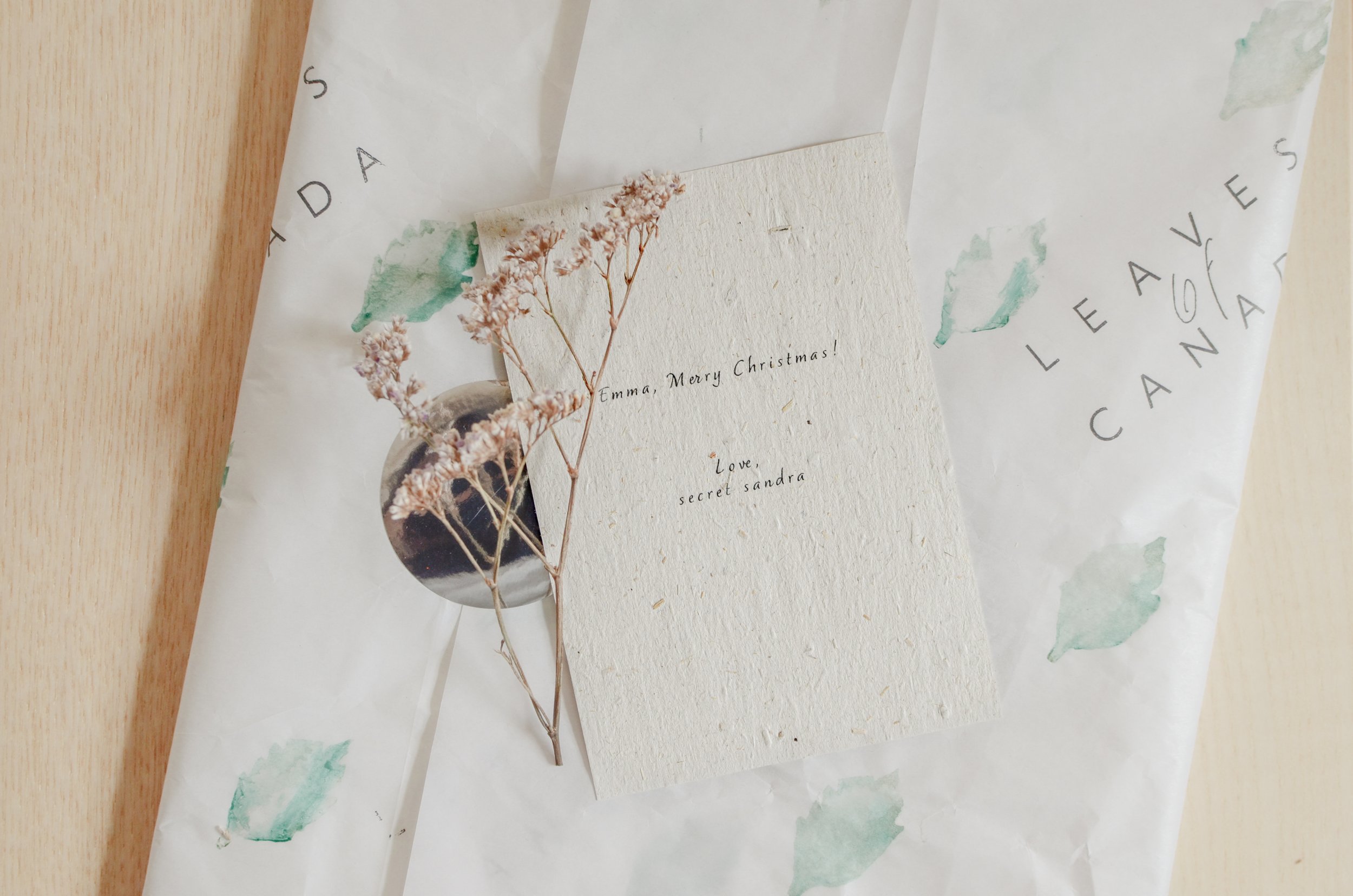
Unlike fresh flowers, a framed print can be enjoyed for years, and every glance is a small reminder of the person who gifted it.
How We Create Botanical & Flower Art at Leaves Of Canada
Leaves Of Canada is a quiet tribute to the rhythms of the natural world.
Through paper and ink, each piece captures fleeting moments – branches in wind, petals in light, the stillness between seasons.
Here’s how our work usually comes to life:
Observation & research – walks, field guides, photos, and notes on real plants, especially those found across Canada.
Drawing & painting – detailed botanical illustrations with a focus on natural shape, subtle asymmetry and gentle colour.
Refining for print – adjusting composition, scale, and palettes so the piece works well as wall art in modern homes.
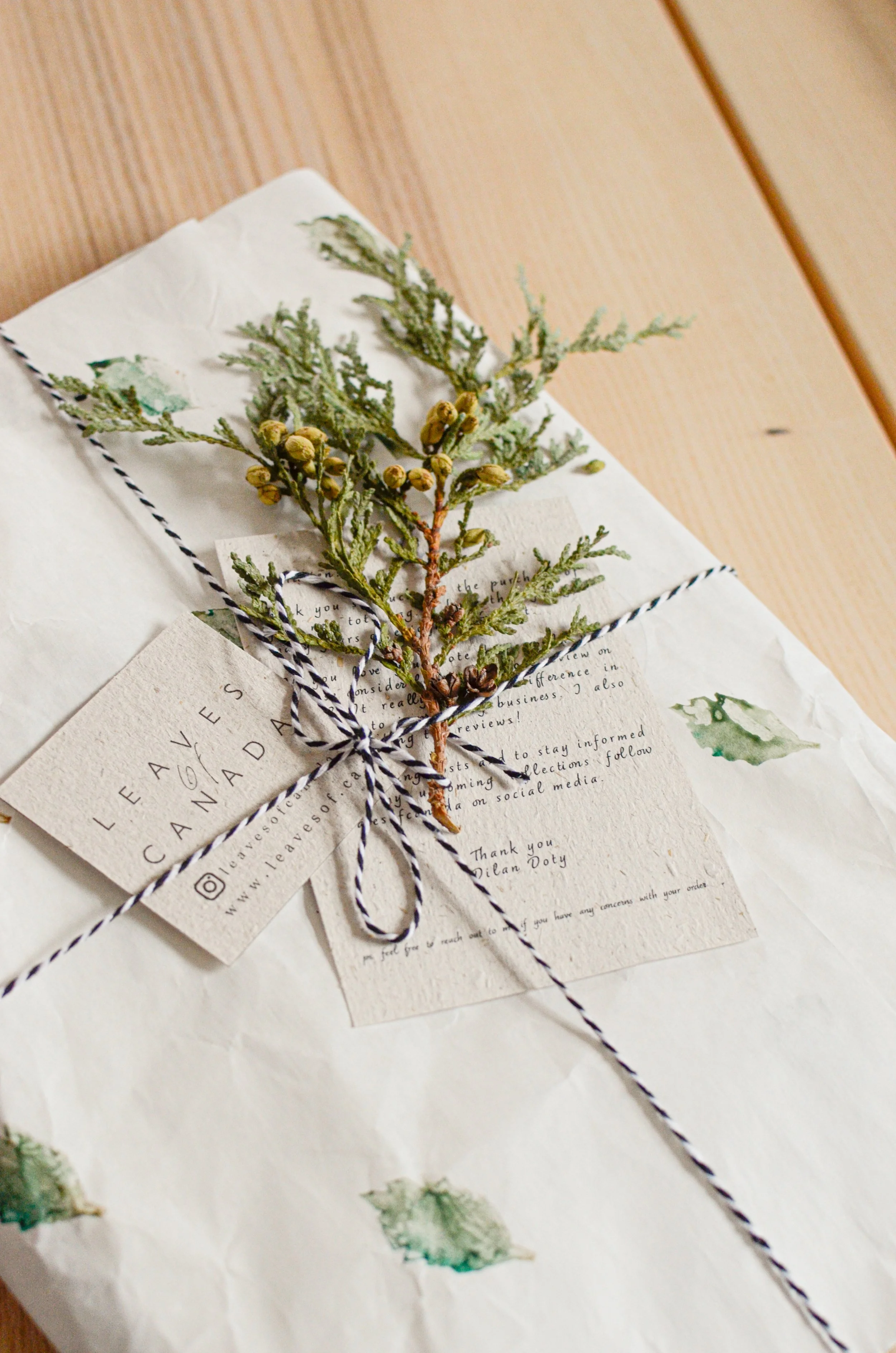
Archival printing – produced in Canada on heavyweight, acid-free paper with pigment-based inks for long-lasting colour.
While this post focuses on flower art in Canada, our collection also includes:
leaves and branches
forest understory plants
berries, seed heads and quiet seasonal details
Flowers are just one way we honour the landscapes we love.
Starting Your Own Small Botanical Collection
You don’t need a huge wall or a big budget to begin.
Start with one piece that feels like “you” – a flower or plant you’re drawn to instantly.
Add slowly – over time, you can introduce a leaf study, a branch, or a complementary bloom.
Mix scales – one larger anchor piece plus one or two smaller works can already feel like a finished collection.
If you’re exploring flower art in Canada for the first time, think of it as building a personal field guide on your walls – a visual record of the plants and places that matter to you.
Where to Find Canadian Flower Art
There are many talented Canadian artists and makers working with florals – from pressed flower studios to photographers and illustrators.
At Leaves Of Canada, we focus on botanical prints that blend gentle colour, fine detail and a calm, contemporary mood. If you’re looking to bring a little of Canada’s plant life into your home, our collection is a quiet place to start.